Camino Frances: Way of Saint James
Santiago means "James"
Santiago de Compostela
500 miles, Biarritz, France; to Santiago de Compostela, Spain.
Here, near Roncesvalles
1. Walk to Santiago de Compostela, as a pilgrim on your own terms. Start most anywhere in Europe. Some feel drawn to the grave of Saint James the Apostle. Is it really there? The conviction motivated innumerable medieval, and now motivates modern pilgrims, on routes to Santiago de Compostela in Spain, at the far Portugal end. See beliefs at
http://www.timeanddate.com/holidays/spain/santiago-apostle/ Others start the walk for their own reasons, solitary, usually; some small groups. How to pace each walker? Easier to go alone?
2. Routes. The routes traditionally originate in many countries in Europe, ultimately funneling through France (especially at Avignon as another funnel point) and the Pyrenees, through passes at St. Sebastian, Saint Jean Pied du Port, to Roncesvalles and Pamplona, or through Huesca, Jaca, Lerida. See the routes at
http://www.santiago-compostela.net/ The most well known may be the route Frances, from Biarritz, France (over the border from San Sebastian) to Santiago de Compostela, Spain, see
http://www.santiago-compostela.net/frances/index_cf_en.html
 Pilgrim, Camino de Santiago, Way of Saint James, to Santiago de Compostela from Roncesvalles, Spain
FN 1
3. Who are the modern pilgrims. Who takes the long, long walk now? It is hundreds of miles to Santiago de Compostela from most starting points. They have their own reasons: self-discovery, self-sorting, as well as religious, for the long, long walk. Regardless of reason, the routes offer places to stay and wash along the way, and sustenance, and reasonably good signs for where to cross the road -- fast -- to get to the safer other side for a while. The leg work, however, is the pilgrim's alone.
4. Back packs are not necessary. Use a pull-cart, as in NY from the supermarket. Those who cannot bear the backpack burden can always use the drag-cart. It does not matter.
 Pilgrim, To Santiago de Compostela, Spain, from near Roncesvalles..
Pilgrim with pull-cart. Yes. How you get to Santiago de Compostela does not matter. The motivation to get there, make a change somewhere in your life, self-insight and/or a religious goal, do matter. To whom? Only tothe walker. And that is all that matters. .Take your own time. There are no clocks, only distance, and the feet.
5. Time commitment. An ordinary person's walk from Pamplona to Santiago to Compostela can take, say six months afoot. Some divide it into segments, as did a friend of mind, taking three months at a time. I long to go. Do, or can, we just jettison the banal and do it and for reasons important to us but not others? Need we justify? Do I count? Does the I in I count, or am I a facilitator for others in this life. Start walking, kiddo.
These pilgrim photographs are from near Roncesvalles, and some as we move toward Barcelona, crossing other routes coming from the south.
6. Identifiers. Pilgrims near St. Jean Pied du Port. On the way, note the Basque traditional structures, the red and white favored scheme. The identification is unique: a staff, a floppy hat, a scallop shell somewhere.
And the walker goes on.
Some monument-like sculptures mark the way, an honor seen here, toward Jaca.
.
.From here, some 760 km to Santiago de Compostela.
.The cows don't even look up.
Follow the scallop shell down the sidewalks, down the roadsides, other signs for where to cross over to a safer place where there is a curve in the road.
......................................................................................................................
FN 1
- Disaster alert. Will that
reference to my own work, to Germany Road Ways, one of our other Europe Road Ways travel
blogs, stimulate a random Google to delete my entire blog? Not likely, with one; but more references, even to oneself, may earn a spam designation and the blog disappears. Is private industry more troublesome to autonomy than government? Private industry can do as it likes with speech, because speech is not protected, not "free" in that setting.
 Loarre Castle, near Jaca, Spain. Distance view from flatland side.
 Loarre Castle, Spain, distance view, castle emerging from the cliff rock. Also near Huesca.
  Castellan's Tower, Loarre Castle, Spain
 Castillo de Loarre, Huesca Province, Spain. Monastery complex tower, Augustinian, 1064 or so.
 Interior Courtyard, Loarre Castle, Spain

 Pilgrim, Camino de Santiago, Way of Saint James, to Santiago de Compostela from Roncesvalles, Spain
 Pilgrim, To Santiago de Compostela, Spain, from near Roncesvalles..
 cc
cc Pilgrim making progress; to Santiago de Compostela from Roncesvalles.
 Marker, Saint James Way, Santiago de Compostela pilgrim route, near Jaca
 Saint James' Way.: Between Roncesvalles and Jaca, 760 km to Santiago de Compostela
 Scallop marker, Way of St. James, to Santiago de Compostela, near Roncesvalles, toward Jaca, Spain.
 Citadel, Castillo de San Pedro, Jaca, Spain
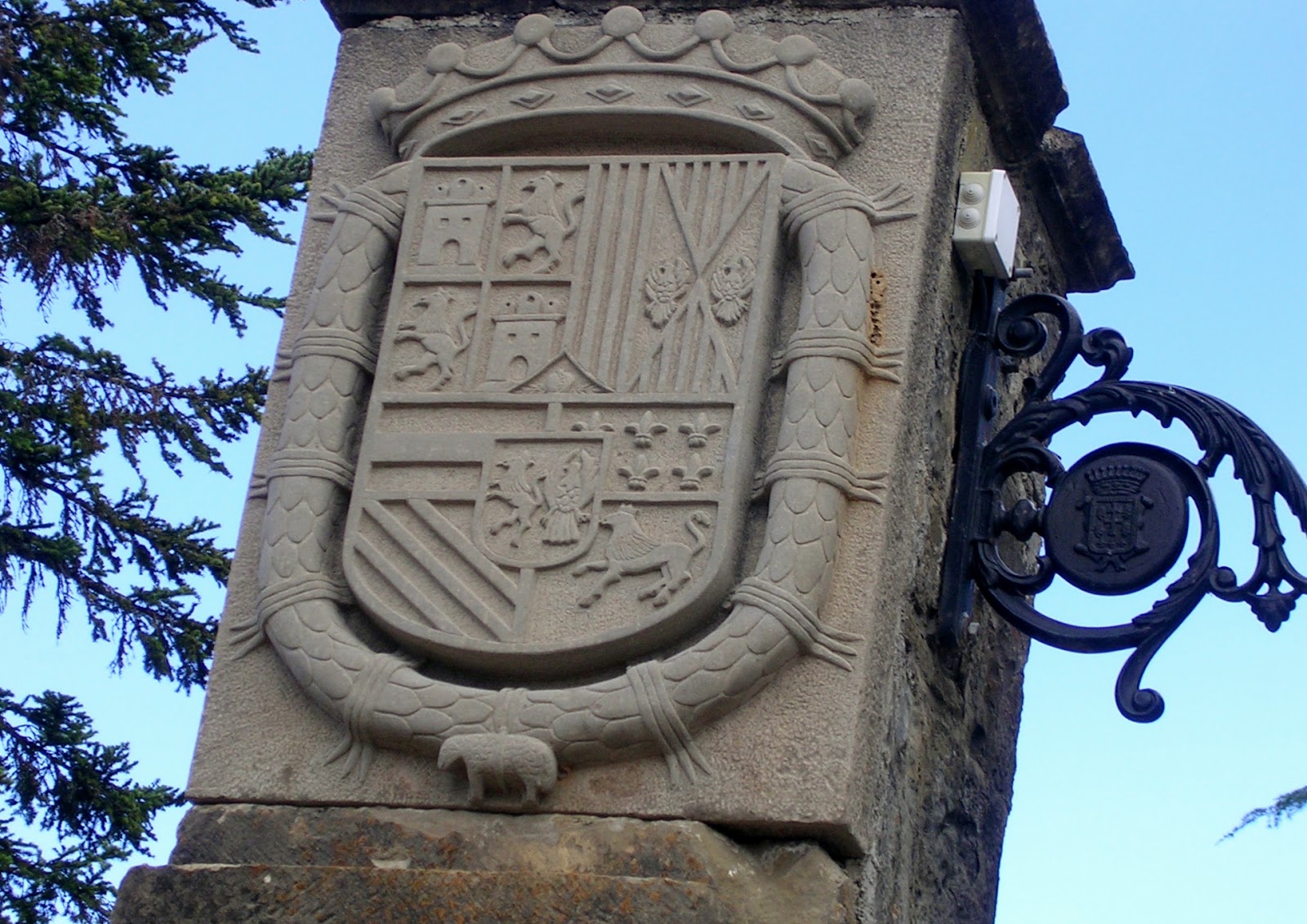 Composite Coat of Arms, Jaca, Spain. Castillo de San Pedro
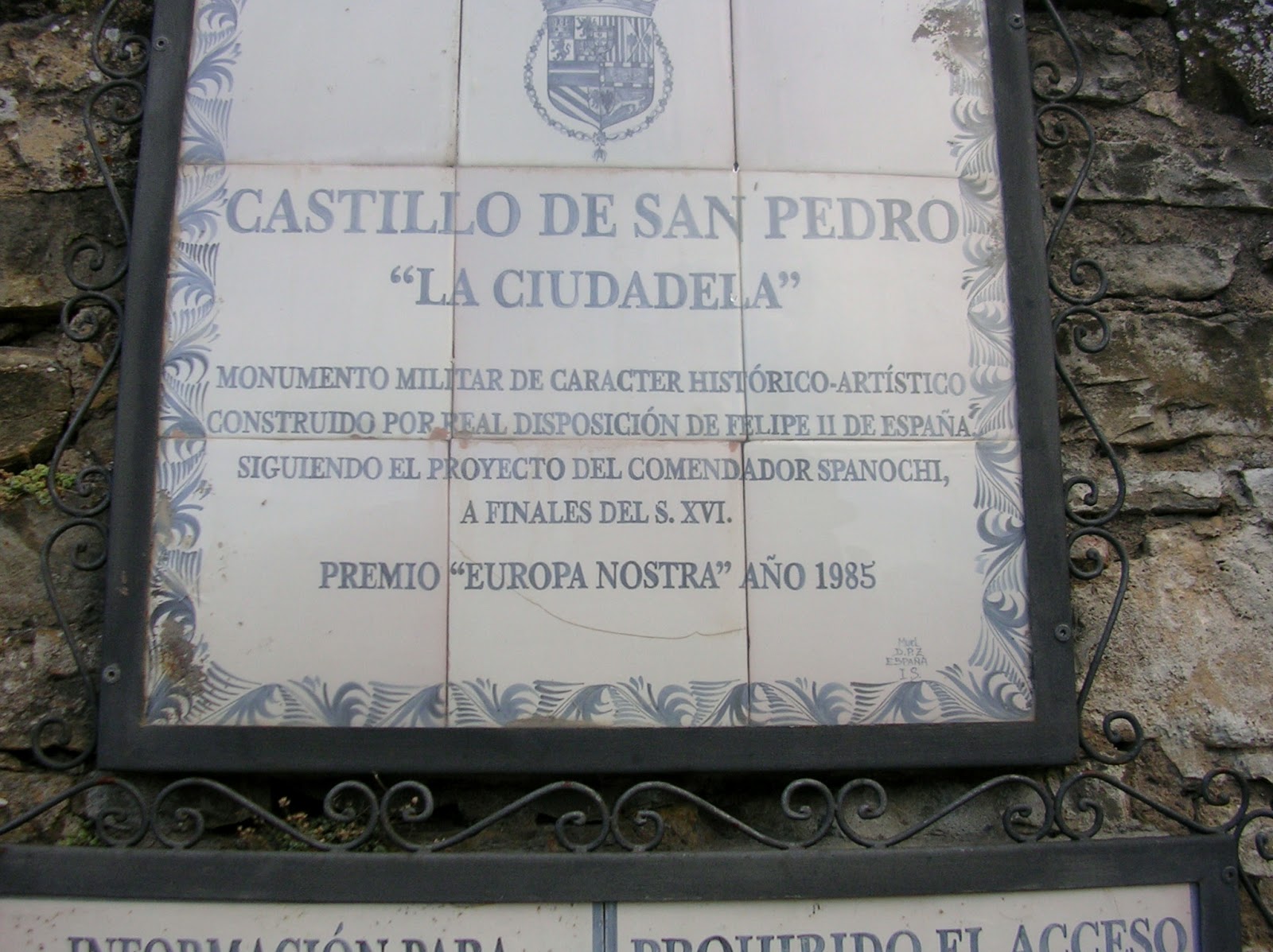 Plaque, La Ciudadela, Castillo de San Pedrol Jaca, Spain
 Hotel Nieu, Jaca, Spain. Family-run, spotless, friendly, good food.
  A Militant Mary, or something else? La Couvertoirade, Church, France.
 Jaca Cathedral, Jaca, Spain. Night view.
 Pub near Jaca Cathedral, Jaca Spain
 Cathedral at Jaca, side entrance loggia or open room
 qq
qq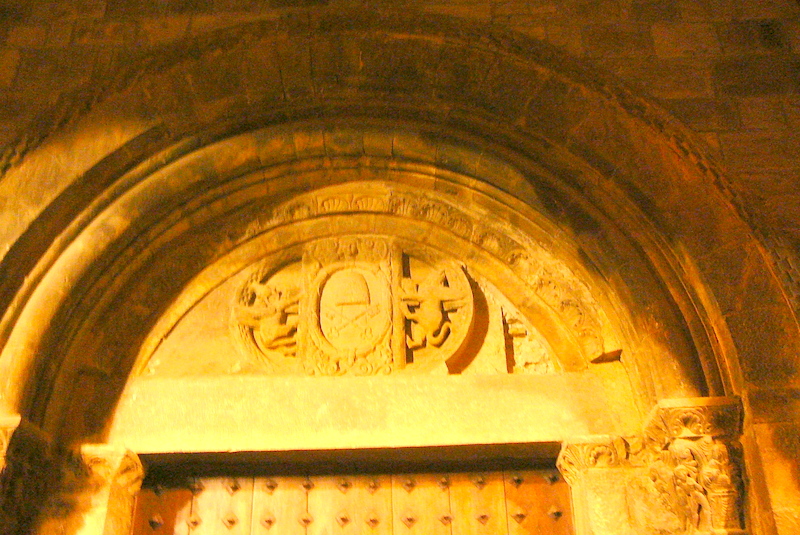 Catedral de San Pedro Apostal, Jaca, Spain. Coat of arms, doorway
 Jaca Cathedral, interior columns showing differing styles
 Small capital, Romanesque, St. Peter the Apostle, Cathedral, Jaca
 Interior, Cathedral at Jaca, Jaca, Spain
 Renaissance renovations, Cathedral at Jaca, Jaca, Spain
 Belfry, Jaca, Spain. Not the Cathedral. What?
 Building contemporary with Cathedral? Wall-spotting, Jaca, Spain.